Lost in the Wild Beauty of Ouarzazate’s Hidden Reserves
Ever thought of a place where desert silence speaks louder than cities? I recently stumbled upon Ouarzazate’s untouched nature reserves—absolutely mind-blowing. Far from crowds, these protected lands offer raw, authentic beauty. Think golden dunes, rugged mountains, and wild resilience. This isn’t just travel—it’s connection. If you’re craving real escape, you gotta check this out. Nestled at the edge of the Sahara, Ouarzazate is often praised as the 'Gateway to the Desert,' but few realize that beyond its famous film studios and ancient ksars lies a network of quiet, protected natural zones. These are places where nature still writes the rules, where wind shapes the land more powerfully than any human hand, and where stillness carries a presence all its own. For travelers seeking more than photo ops and checklists, Ouarzazate’s hidden reserves offer a rare gift: the chance to witness wilderness in its truest form.
Why Ouarzazate? Beyond the Film Studios and Tourist Trails
Ouarzazate is best known as a cinematic haven, where Hollywood epics and global television series have brought ancient deserts and fortress-like kasbahs to life. Its most famous landmark, Ait Benhaddou, draws thousands each year, and rightly so—its earthen architecture rises like a mirage from the desert floor, a UNESCO World Heritage Site that embodies Morocco’s architectural heritage. Yet, for all its cultural fame, Ouarzazate’s natural treasures remain largely overlooked. Just beyond the film sets and guided tours lie vast, protected landscapes that tell a different story—one of ecological endurance, quiet beauty, and deep-rooted stewardship.
These reserves are not marked by grand entrances or souvenir shops. Instead, they unfold gradually—through shifting sands, rocky plateaus, and ancient riverbeds that whisper of water long gone. The region sits at a unique ecological crossroads, where the High Atlas Mountains meet the edge of the Sahara Desert. This convergence creates microclimates and habitats that support a surprising variety of life, much of it adapted to extreme conditions. While tourism infrastructure focuses on history and cinema, the natural world here operates on a different rhythm, one measured in seasons, not schedules.
What makes Ouarzazate truly special is not just its scenery, but its accessibility to untouched spaces. Unlike more commercialized desert destinations, many of its reserves remain low-traffic by design. There are no paved roads cutting through the dunes, no luxury desert camps dominating the skyline. Access is often limited to 4x4 tracks or footpaths, preserving the integrity of the land. For travelers willing to go beyond the usual itinerary, this means the rare opportunity to experience solitude in a natural setting—something increasingly rare in the modern world.
The Heart of the Desert: Exploring the Tinfou Dunes and Surrounding Protected Zones
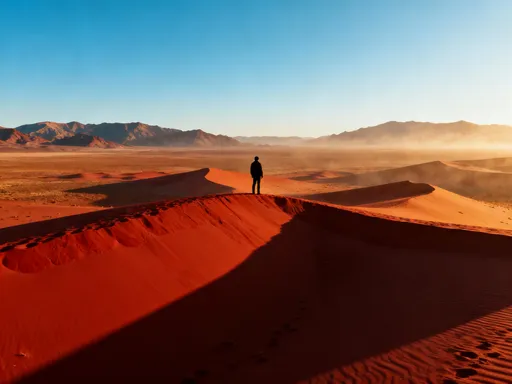
Just a short drive southeast of Ouarzazate, the Tinfou Dunes rise like waves frozen in time. Often overshadowed by the more famous Erg Chigaga or Erg Chebbi, Tinfou offers a more intimate desert experience—one that feels personal, unscripted, and deeply peaceful. These dunes are smaller in scale but rich in texture, their red-gold sands shaped daily by the wind into ever-changing patterns. At sunrise, the light spills over the crests in soft amber, casting long shadows that stretch across the valley floor. By midday, the heat rises in visible waves, and by night, the temperature drops, revealing a sky so clear it feels within reach.
Tinfou lies within a broader network of protected zones managed under Morocco’s national conservation framework. While not a national park in the formal sense, the area benefits from informal protection due to its remoteness and the presence of local guardianship. The dunes are part of a fragile desert ecosystem where even minor disturbances can have lasting effects. Vegetation is sparse but vital—patches of hardy grasses, tamarisk shrubs, and the occasional acacia tree anchor the soil and provide shelter for small creatures. These plants are not merely decorative; they are lifelines in an environment where water is measured in drops and survival is a daily negotiation.
One of the most profound aspects of Tinfou is its silence. Without the hum of traffic or the chatter of crowds, the desert reveals its own sounds—the whisper of sand shifting, the distant call of a lark, the rustle of a gecko moving through the rocks. At night, the stars emerge in astonishing clarity. The Milky Way stretches across the sky like a river of light, undimmed by artificial glow. For visitors, this sensory shift can be transformative. It’s not just about seeing the desert, but feeling it—understanding its rhythms, its stillness, and its quiet power.
Because infrastructure is minimal, visiting Tinfou requires preparation. There are no restaurants or marked trails, and mobile service is unreliable. But this lack of convenience is part of its value. It forces travelers to slow down, to be present, to engage with the landscape on its own terms. Some local guides offer overnight camel treks or simple tented stays, providing just enough support to ensure safety without disrupting the environment. These experiences are not about luxury—they’re about connection.
Mountains Meet Sahara: The Biodiversity of the Djebel Saghro Range
While the dunes capture the imagination, the true ecological heart of Ouarzazate’s wilderness lies in the Djebel Saghro mountain range. Stretching across the southeastern edge of the province, this volcanic plateau rises to over 2,700 meters, creating a dramatic contrast to the surrounding desert. Unlike the rolling sands, Djebel Saghro is a land of canyons, basalt cliffs, and high-altitude plateaus where cold winds sweep across open valleys. It is one of Morocco’s most ecologically significant yet least-visited protected areas, designated in part for its role in preserving endemic species and traditional agro-pastoral systems.
The biodiversity here is remarkable. The higher elevations support juniper forests and wild thyme, while sheltered valleys harbor date palms and ancient olive trees. It is one of the last strongholds of the Barbary sheep, or aoudad, a majestic creature with curved horns and sure-footed grace that navigates steep cliffs with ease. Though elusive, sightings are possible at dawn or dusk, particularly in the more remote wadis. Smaller mammals like the African wildcat and the desert hedgehog also find refuge here, as do reptiles such as the ocellated skink and the spiny-tailed lizard.
Birdwatchers will appreciate the range’s role as a migratory corridor. Rüppell’s warblers, trumpeter finches, and Bonelli’s eagles are among the species that either nest here or pass through during seasonal movements. The variety of habitats—rocky outcrops, dry riverbeds, and high meadows—creates niches for specialized life forms, many of which are found nowhere else in North Africa. Botanists have documented dozens of endemic plant species, including rare succulents and alpine herbs adapted to the region’s extreme temperature swings.
Hiking through Djebel Saghro is an adventure in discovery. Trails wind through narrow gorges, past ancient agadir—fortified communal granaries built by Berber communities centuries ago. These structures, perched on rocky outcrops, speak to a long history of human adaptation to harsh conditions. Local guides often share stories of how families once stored grain here to protect it from raiders and drought. Today, these ruins stand as quiet monuments to resilience, surrounded by a landscape that remains largely unchanged.
Conservation in Action: How Local Communities Protect These Lands
The preservation of Ouarzazate’s natural reserves is not the work of distant bureaucracies—it is rooted in the daily lives of local Berber communities. For generations, these families have lived in balance with the land, practicing sustainable agriculture, seasonal migration, and careful resource management. Their knowledge is not theoretical; it is born of necessity and passed down through oral tradition. Today, this heritage is being integrated into modern conservation efforts, creating a model of eco-stewardship that honors both nature and culture.
One of the most impressive examples is the revival of the khettara system—an ancient method of underground water channeling that brings groundwater to the surface without pumps or electricity. These hand-dug tunnels, some over a century old, reduce evaporation and allow small-scale farming in arid zones. In recent years, community cooperatives have restored several khettharas, not only to support agriculture but also to prevent desertification. This blend of tradition and environmental protection demonstrates how ancestral wisdom can contribute to modern sustainability.
Eco-tourism initiatives led by local cooperatives are another cornerstone of conservation. Rather than allowing outside companies to dominate the tourism economy, villages in the Tinfou and Djebel Saghro areas have formed collectives that offer guided hikes, homestays, and cultural experiences. These programs ensure that tourism revenue stays within the community, providing incentives to protect the land. When families earn income from guiding treks or hosting visitors, they become invested in maintaining the health of the ecosystem.
These efforts are supported by NGOs and government programs that provide training in sustainable practices, first aid, and hospitality. But the driving force remains local. Guides are often farmers or herders who know the terrain intimately. They teach visitors how to read animal tracks, identify edible plants, and navigate by landmarks. More importantly, they model respect—for the land, for wildlife, and for the delicate balance that makes life possible in such a harsh environment.
What to See (and Respect): Wildlife and Flora in Ouarzazate’s Reserves
For those who visit with patience and care, Ouarzazate’s reserves offer quiet encounters with desert-adapted life. The fennec fox, with its oversized ears and nocturnal habits, is a rare but cherished sight. These small, agile creatures are perfectly suited to the heat, using their ears to dissipate warmth and their paws to dig for insects and roots. Equally fascinating is the desert monitor lizard, a reptile that can grow up to a meter in length and is often seen basking on sun-warmed rocks. Though they look prehistoric, they play a vital role in controlling insect populations.
Birdlife is more visible, especially near oases or seasonal water sources. The houbara bustard, a ground-nesting bird, is one of the region’s most protected species due to past overhunting. Conservation programs have helped stabilize its numbers, but it remains shy and difficult to spot. More commonly seen are the laughing doves, desert wheatears, and the striking blue-cheeked bee-eater during migration seasons. Even the skies tell a story—raptors like the lanner falcon patrol the thermals, scanning for movement below.
Plant life, though less dramatic, is no less important. The acacia tree, with its thorny branches and deep roots, is a cornerstone of the ecosystem. It provides shade, prevents soil erosion, and supports symbiotic relationships with ants and insects. Other resilient species include the argan tree—famous for its oil—and the succulent-euphorbia, which stores water in its fleshy stems. These plants do not grow quickly, and damage from off-roading or firewood collection can take decades to recover.
Responsible viewing is essential. Travelers should stay on established paths, avoid loud noises, and never attempt to feed or approach wildlife. Even seemingly harmless actions—like picking a flower or stacking rocks—can disrupt delicate balances. The principle is simple: observe, appreciate, and leave no trace. These reserves are not zoos or botanical gardens; they are living systems that depend on minimal human interference to thrive.
Practical Tips for Visiting: When to Go, How to Get There, What to Bring
Timing is crucial when planning a visit to Ouarzazate’s reserves. The best seasons are spring (March to May) and autumn (September to November), when temperatures are moderate and the risk of extreme heat or cold is low. Summer months can see daytime temperatures exceed 40°C (104°F), making extended outdoor activity dangerous. Winter nights in the mountains can drop below freezing, so warm clothing is essential for high-altitude treks.
Getting to the reserves typically requires a 4x4 vehicle, especially for Djebel Saghro or remote parts of the Tinfou area. While some roads are passable with a regular car, many tracks are unpaved, rocky, or sandy. Hiring a local driver with experience in off-road navigation is highly recommended. Public transportation is limited and rarely serves these remote zones. Most visitors begin their journey from Ouarzazate city, where rental agencies and tour operators offer guided excursions.
Packing wisely is non-negotiable. Essential items include at least three liters of water per person per day, sun protection (wide-brimmed hat, UV-blocking sunglasses, high-SPF sunscreen), and layered clothing to adapt to temperature swings. A reliable map or GPS device is critical—mobile networks are spotty, and getting lost is a real risk. A basic first-aid kit, flashlight, and extra food should also be included. For overnight stays, a warm sleeping bag and lightweight tent are advisable.
Perhaps the most valuable tool is a local guide. Not only do they ensure safety, but they enrich the experience with cultural and ecological insights. Many speak multiple languages and are trained in desert survival techniques. Booking through a community cooperative supports sustainable tourism and ensures that your visit contributes positively to conservation efforts.
Redefining Adventure: Why Off-the-Beaten-Path Travel Matters
In an age of instant travel content and crowded bucket lists, visiting places like Ouarzazate’s hidden reserves offers a different kind of adventure—one defined not by adrenaline, but by awareness. True exploration is not about conquering landscapes, but about listening to them. It’s about recognizing that beauty exists not only in the grand and dramatic, but in the quiet resilience of a desert flower or the path of a fox across the sand.
These protected areas matter because they remind us of what is possible when humans step back and allow nature to lead. They are not just scenic backdrops; they are functioning ecosystems that support life in one of the planet’s most challenging environments. By choosing to visit them responsibly, travelers become part of a larger story—one of preservation, respect, and quiet wonder.
More than that, off-the-beaten-path travel fosters a deeper connection to place and people. It slows us down, strips away distractions, and invites reflection. It challenges the notion that value must be measured in convenience or comfort. Instead, it offers richness in simplicity—in the warmth of shared tea with a Berber family, in the silence of a desert night, in the pride of knowing your presence helped protect, not harm.
So if you’re ready to move beyond the expected, to trade crowds for stillness and spectacle for substance, consider Ouarzazate’s wild reserves. Let the desert speak. Listen closely. And carry its lessons forward—not just in memory, but in action. Travel thoughtfully. Leave no trace. And let the wild places remain wild.