Wander Deeper, Not Farther: The Quiet Art of Meaningful Travel
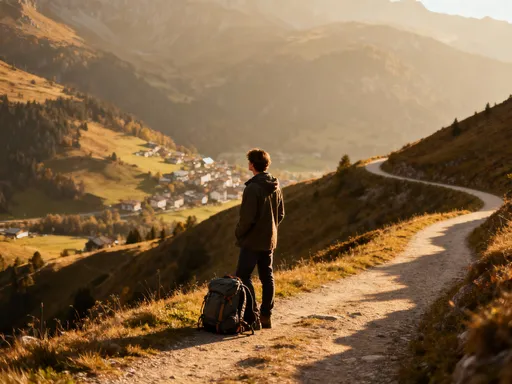
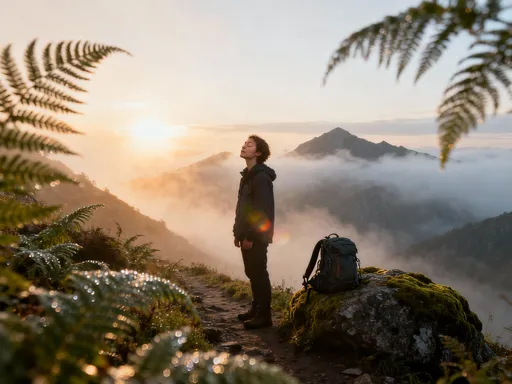
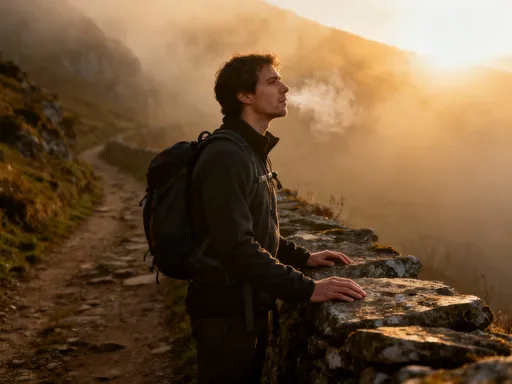
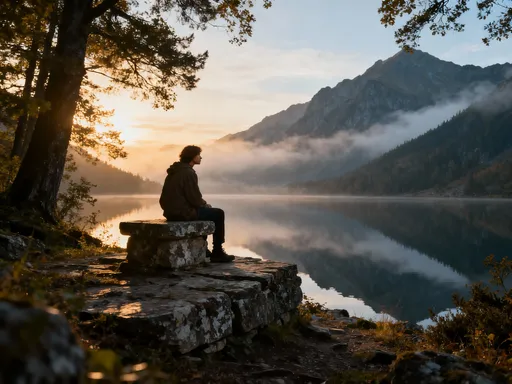
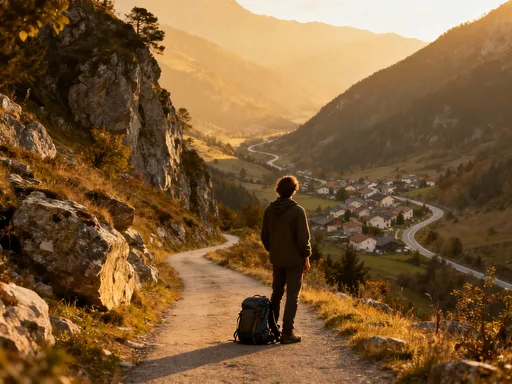
Every year, millions set off in search of wonder—yet return unchanged, their suitcases full but their souls unshaken. True travel is not measured in miles, but in moments that quietly redefine us. It’s the hush of a mountain dawn, the laughter shared in a crowded market, the unexpected kindness of a stranger. Purposeful journeys, not just destinations, reshape perspective. This is not about chasing landmarks, but about choosing paths that awaken curiosity, deepen connection, and unfold with intention. When travel becomes a practice of presence rather than proof, it transforms from movement across geography into movement within the self.
The Heartbeat of the Journey: Why Experience Trumps Itinerary
At its core, travel answers a silent call—an invitation to step beyond the familiar and touch something real. Yet for many, the experience ends where the camera battery dies. They return with albums full of sights, but few of these images stir memory or meaning. The difference lies not in where they went, but how they were present once they arrived. Research in experiential psychology reveals that travelers who prioritize **deep engagement** over checklist completion report greater emotional enrichment and long-term well-being. These are not the loudest journeys, but the quietest—the ones where observation replaces capture, and stillness becomes its own kind of discovery.
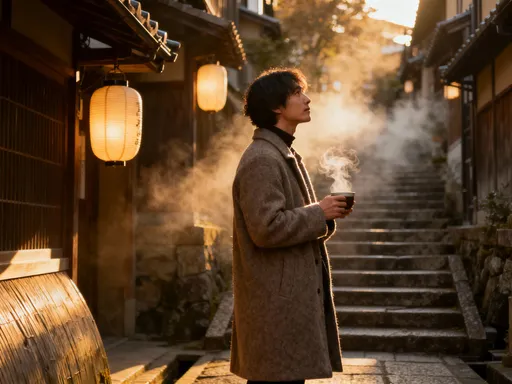
Consider two visitors to Kyoto: one follows a rigid schedule, ticking off temples between meals, posting stories every hour. The other lingers at a single garden for ninety minutes, noticing the way moss clings to stone, how wind moves through bamboo. Who absorbs more of Kyoto? Not the one who saw more, but the one who paid attention. This shift—from consuming experiences to inhabiting them—is the foundation of meaningful travel. It begins with redefining success: not by how much you cover, but by how deeply you feel.
A growing body of evidence supports this inward turn. A 2022 University of Edinburgh study found that participants who engaged in unstructured, reflective travel reported 42% higher levels of personal insight compared to those following detailed itineraries. Emotional impact was also more enduring, with effects lasting up to six months post-trip. The reason? When travelers slow down, they activate what neuropsychologists call the “default mode network,” the part of the brain responsible for self-reflection, empathy, and memory consolidation. In other words, presence doesn’t just improve travel—it changes the traveler.
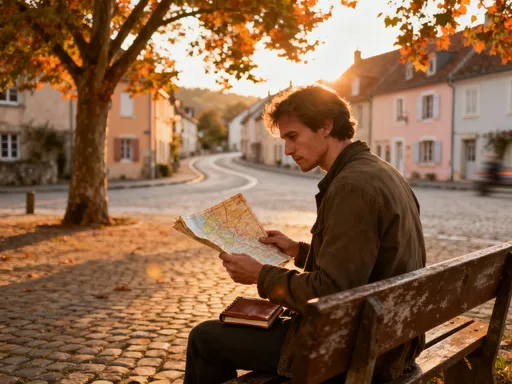
One practical way to cultivate this is the “pause principle.” This technique asks travelers to dedicate one intentional moment per day to being fully present—without recording, narrating, or planning the next move. It might be sitting on a park bench in Lisbon, watching locals walk their dogs. Or standing at a ferry railing in Greece, feeling salt spray on skin while the engine hums. During these pauses, no photos are taken. The only task is to take in the scene through all five senses. Over time, these small acts accumulate into a deeper sensory memory, one that lasts far longer than any digital archive.
Choosing with Clarity: The Hidden Logic Behind Destination Selection
Most travelers choose destinations the way they pick movies—based on trailers. A friend’s photo from Santorini. A viral video of lavender fields in Provence. The decision is impulsive, driven by aesthetics rather than alignment. But the most fulfilling journeys begin not with inspiration, but with introspection. What kind of experience are you truly seeking? Peace? Renewal? Connection? Clarity in destination choice starts with this inward question, not the outward allure of a postcard.
A 2023 Global Travel Insight Survey revealed a striking pattern: travelers who selected locations based on personal values—such as a desire for solitude, cultural depth, or natural immersion—reported 68% greater satisfaction than those who followed trending lists. One participant, a schoolteacher from Oregon, chose a week in rural Galicia over a popular Mediterranean cruise because she valued slowness and silence. Her description of mornings feeding chickens at a family-run *pousada*, followed by walks along misty coastal paths, radiated contentment. Compare this with another traveler, who returned from a packed Greek island itinerary admitting, “I saw everything, but I remember nothing.” The contrast underscores a vital truth: satisfaction in travel is less about location and more about alignment.
To make intentional choices, travelers can use a simple framework based on three criteria: climate alignment, cultural accessibility, and emotional resonance. Climate alignment refers to whether a destination’s weather, light, and natural rhythms match your physical and emotional needs. For someone recovering from burnout, the sharp cold and long nights of a Scandinavian winter might not support healing, whereas the gentle warmth of Andalusian spring could.
Cultural accessibility considers how easily a traveler can connect with local life. This doesn’t mean English proficiency—it means openness to exchange. Some cultures welcome curious visitors; others are more reserved. Emotional resonance is deeply personal. Does the idea of wandering narrow alleyways in Fez fill you with excitement or anxiety? Can you imagine feeling at home in a fishing village in Vietnam, or does the thought of it unsettle you? These feelings are data. They reveal not what you *should* see, but where you might truly belong, even briefly.
One effective exercise is to ask: What kind of stillness am I seeking? Is it the stillness of vast landscapes—the silence of a desert or tundra? Or the stillness found in human warmth, like watching elders play chess in a city square? Answering this helps filter out noise and identifies destinations that resonate rather than impress.
The Rhythm of Arrival: Slowing Down to Speed Up Connection
Arrival is often treated like a starting gun. The moment feet touch foreign soil, the countdown begins: breakfast at 8, museum at 9:30, lunch by 12. But rushing upon arrival is like opening a book and flipping through pages without reading. The essence is lost. The most meaningful travel unfolds not in speed, but in rhythm—a gradual syncing with the tempo of a new place.
Neuroscientists have identified a phenomenon known as “environmental entrainment,” where the human brain and body begin to mirror the patterns of a new setting. This process takes time. Jet-lagged and overstimulated, the newcomer is in sensory overload. Yet many push through, mistaking activity for progress. The result? A week of motion without meaning.
To counter this, experts recommend the “three-day rule”: allow three full days of gentle immersion before forming judgments or making ambitious plans. During this time, the goal isn’t to see everything, but to feel anything. Walk without destination. Sit in a café and observe. Let the sounds, smells, and rhythms wash over you. In Hanoi, this might mean lingering at a roadside stall, sipping sweet iced tea while motorbikes hum past. In Porto, it could be following the sound of fado music down a cobbled alley, even if you never find its source.
These early days are not wasted—they are foundational. They allow travelers to shed the pace of home and absorb the pulse of the present. Just as a musician must tune their instrument before playing, so must a traveler tune their attention before engaging. Those who resist the urge to perform and instead allow for soft arrival often report richer experiences later in their trip. They form conversations more easily, notice subtleties others miss, and develop an intuitive sense of where to go next—not because it’s listed, but because it feels right.
“Micro-immersion” is a powerful tool during this phase. These are small, intentional acts that ground the traveler in the local fabric: learning five key phrases in the native language, visiting a neighborhood market instead of a tourist bazaar, or walking the same route each morning. One traveler in Oaxaca began greeting the same baker each day. By day four, they shared coffee and stories. That simple repetition built a bridge no tour ever could.
Beyond the Guidebook: Unlocking Local Realms With Quiet Confidence
Guidebooks serve a purpose—they orient, inform, and offer structure. But the most resonant travel moments happen in the margins, far from printed pages. They occur when a grandmother invites you into her kitchen in Sicily. When a fisherman shares bread with you on a dock in Norway. These encounters do not arise from following directions—they emerge from presence, openness, and respect.
Accessing such experiences requires a shift from tourist to guest. This means approaching communities not as a consumer, but as a visitor seeking connection. One effective strategy is to spend time in places where life unfolds organically: community gardens, public libraries, neighborhood festivals. These are not curated for visitors; they are lived. Attending a small local festival in rural Japan, for instance, offers a glimpse into traditions not performed for cameras but practiced with devotion.
Technology can also bridge connection when used thoughtfully. Apps like Homestay, Localbini, and Meet & Eat link travelers with residents who welcome authentic exchange. Unlike commercial tours, these platforms emphasize reciprocity. A traveler might join a family for dinner in Marrakech, bringing a small gift from home and leaving behind gratitude, not just currency. The exchange feels balanced, human.
Equally important is knowing what not to do. Ethical travel means recognizing boundaries. Photographing people without permission, barging into private rituals, or treating sacred spaces as backdrops erodes trust. Instead, offer a smile. Ask with your eyes, your hands, your silence. When in doubt, observe first. One traveler in Bali waited for hours outside a temple ceremony, simply sitting. Only when invited did she step forward. That gesture of restraint was remembered—and appreciated.
The story of a homestay in Chefchaouen illustrates the power of this mindset. Instead of staying in a hotel, a woman from Canada chose a family-run guesthouse. Each morning, she helped prepare bread. In the afternoons, she walked with the grandmother to collect herbs. No tours were booked. Yet by week’s end, she felt she had seen the soul of the town. “They didn’t show me Morocco,” she said. “They let me live in it.”
Planning That Breathes: Flexibility as a Travel Superpower
Itineraries are not the enemy—rigidity is. The moment a schedule becomes sacred, travel loses its magic. Yet many travelers plan as if their enjoyment depends on precision: train at 10:17, café at 12:03, museum exit by 14:30. This mechanical approach turns exploration into a performance. Joy becomes conditional on adherence.
A more liberating alternative is “fluid planning”—designing a journey with intention, but not inflexibility. This method prioritizes spaciousness over structure. Instead of hourly blocks, travelers outline daily themes: “curiosity,” “rest,” “connection.” Each day includes only one anchor—a non-negotiable moment such as a cooking class or sunrise hike. Everything else remains open.
Research supports this approach. A 2021 travel behavior study found that travelers with open-ended schedules reported 57% more spontaneous, meaningful encounters than those following detailed plans. They were also less likely to experience decision fatigue or travel burnout. Spontaneity, it turns out, is not the opposite of planning—it is its complement.
Consider a traveler in Kyoto who begins her day at Kinkaku-ji, the Golden Pavilion. By 9:30, she’s done. Instead of racing to the next site, she follows the scent of grilled mochi to a side street. There, she meets an elderly vendor who teaches her how to fold paper cranes. That afternoon, she wanders into a small temple where a monk offers tea. None of this was planned—yet each moment feels more authentic than any museum display.
Journaling enhances fluid planning. Rather than recording schedules, travelers jot down impressions: the color of light at dusk, the taste of a fruit they can’t name, a line of poetry overheard. These fragments become a living map of the journey, one that grows not from destinations reached, but from feelings gathered. Over time, the journal becomes a mirror—reflecting not just where the traveler went, but who they became along the way.
The Traveler’s Mindset: Cultivating Curiosity Without Consumption
Tourism has a shadow side: the tendency to reduce people and places to experiences to be consumed. Markets become photo ops. Traditions become performances. Faces become foregrounds for selfies. This extractive mindset leaves little room for reciprocity—and even less for transformation.
The antidote is a **curiosity compass**—a set of simple, open-hearted questions that shift the traveler’s role from observer to participant. Instead of asking “What can I take from this place?” ask “What can I learn from this moment?” Questions like What do you love about your city? or What’s changed here in the past ten years? do not demand answers—they invite connection. They signal respect. And more often than not, they unlock stories more valuable than any souvenir.
In Medellín, a traveler asked a café owner this simple question: “What made you decide to open here?” What followed was a two-hour conversation about resilience, family, and the rebirth of a neighborhood once marked by hardship. In Ljubljana, another traveler inquired about local festivals. The response? An invitation to join a family celebration the next evening.
These moments are not rare because they are difficult—they are rare because most travelers never ask. A 2022 cultural exchange survey found that 73% of locals felt deeply respected when travelers asked thoughtful questions. Only 12% reported being asked anything beyond directions or prices. The implication is clear: curiosity is the rarest currency in travel, but also the most enriching.
Yet listening may be even more powerful than questioning. The ability to sit in silence, to absorb a story without rushing to respond, to let someone speak without interruption—this is the true gift of presence. In Vietnam, a woman spent an afternoon with a rice farmer who spoke little English. They shared tea, watched the sky turn orange, and smiled across the language gap. She later said, “I didn’t learn his history, but I felt his dignity.” That feeling stayed with her long after the trip ended.
Returning Changed: How to Carry the Journey Home
The end of a journey is not the airport—not really. It is the quiet moment weeks later when you catch yourself using a phrase from another language. When you pause to notice morning light the way you did in Santorini. When you choose a local market over a supermarket, remembering the rhythm of a bazaar in Marrakech. True travel doesn’t end when the suitcase is unpacked. It continues in the choices we make, the perspectives we carry, the way we see our own lives anew.
Yet re-entry is often its own challenge. The contrast between the stillness of the road and the noise of daily life can feel jarring. This disorientation is normal—and necessary. It signals that change has occurred. The key is not to suppress it, but to integrate it.
Rituals help. Creating a “memory map” on a wall—pinning photos, ticket stubs, sketches—transforms abstract nostalgia into tangible reflection. Hosting a themed meal using recipes collected abroad turns memory into shared experience. One woman in Toronto holds an annual “Oaxaca Night,” where friends gather to eat mole, listen to traditional music, and hear stories from her trip. The journey lives on.
Adopting a single local habit can also deepen integration. Maybe it’s brewing tea slowly, as in Kyoto. Or walking without a destination, as in Lisbon. These small acts become anchors—reminders that presence is portable. They prove that transformation doesn’t require constant movement. It can be cultivated in the kitchen, the park, the quiet of morning.
In the end, travel is not about how far we go, but how deeply we feel. It is not a checklist of destinations, but a mirror held up to the self. The world shows us beauty, yes—but also our capacity for wonder, for connection, for change. When we wander deeper, not farther, we don’t just see the world differently. We become different ourselves. And that is the quietest, most lasting journey of all.