Lost in Utrecht’s Wild Heart: Where Culture Meets Nature
Have you ever seen a city where canals weave through meadows and churches stand beside blooming wetlands? Utrecht isn’t just cobbled streets and historic towers—it’s a living landscape where nature and culture blend in surprising harmony. I never expected to find wildflowers growing beside 12th-century cloisters or kayakers gliding past medieval warehouses. This is not just a travel story—it’s an invitation to experience a different side of the Netherlands, where every bend in the river tells a story. In Utrecht, history doesn’t stand still; it flows with the water, grows with the seasons, and lives in the daily rhythms of its people. Here, urban life doesn’t conquer nature—it collaborates with it.
Arriving in Utrecht: First Impressions Beyond the Postcard
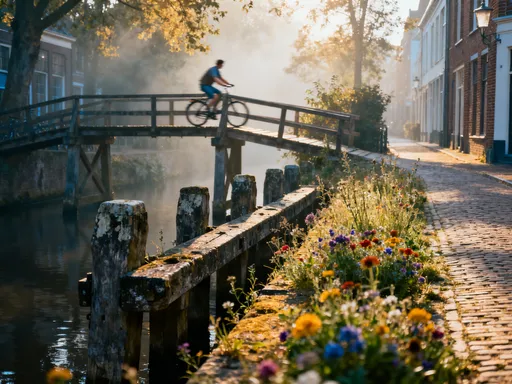
Stepping out of Utrecht Central Station, visitors are met with a striking contrast: sleek glass architecture and bustling commuter life give way, within minutes, to serene waterways and tree-lined avenues. Unlike cities where nature feels like an afterthought, Utrecht reveals its green soul immediately. The city center, often photographed for its iconic wharf cellars—those sunken terraces along the Oudegracht canal—harbors a deeper truth beneath its postcard charm. These 12th-century canals, once vital for trade and transport, now serve as ecological corridors where kingfishers dart between reeds and frogs croak from hidden banks.
What sets Utrecht apart is how seamlessly its modern identity coexists with environmental stewardship. Green roofs blanket public buildings, absorbing rainwater and hosting bee colonies. Solar panels are integrated into historic facades without disrupting architectural integrity. Even the tram lines are designed to minimize disruption to tree roots and pedestrian pathways. This is not accidental—it’s the result of decades of urban planning that treats nature not as decoration, but as infrastructure. For the thoughtful traveler, especially those who value balance and sustainability, Utrecht offers a refreshing model of how cities can thrive without overpowering the natural world.
The cultural heartbeat of Utrecht pulses strongest along its waterways. The Oudegracht, meaning 'Old Canal,' was originally dug to divert the Kromme Rijn River for flood control and navigation. Over time, merchants built warehouses along its edges, lowering cellars into the banks to store goods—today’s popular restaurants and boutiques. Yet, amid the vibrant café culture, native plants like yellow iris and water mint reclaim the edges, supported by city-led initiatives to restore aquatic biodiversity. This blend of heritage and habitat is not unique to Utrecht in the Netherlands, but it is particularly well realized here, where every restoration project considers both historical significance and ecological function.
The Green Pulse of the City: Urban Nature with Cultural Roots
Utrecht’s parks are more than recreational spaces—they are expressions of national values. Take Wilhelmina Park, opened in 1937, named after a beloved queen, and designed with geometric precision that reflects the Dutch affinity for order and practical beauty. Wide lawns invite families to spread blankets in summer, while winding paths guide joggers and dog walkers through groves of beech and chestnut. In spring, daffodils and crocuses burst into color, signaling not just seasonal change but a collective return to outdoor life—a cultural ritual as much as a botanical one.
Equally significant is Leidsche Rijn, a newer district built with sustainability at its core. Its central park, Leidse Rijn Park, spans over 70 hectares and integrates wetlands, meadows, and woodlands into daily urban life. Children learn about pollinators in school field trips, while locals participate in citizen science projects tracking bird migrations and plant health. These green spaces are not isolated oases but interconnected nodes in a larger ecological network, linked by green bridges and cycle paths that allow both people and wildlife to move freely. The Dutch concept of 'groenstructuur'—green structure—is evident here, where nature is planned systematically, not haphazardly.
This commitment to accessible green space stems from a deep-rooted cultural tradition. Since the 19th century, Dutch urban planners have championed the idea that all citizens, regardless of income, deserve proximity to nature. This egalitarian principle remains strong today. Parks in Utrecht are well-maintained, safe, and inclusive, hosting everything from outdoor yoga classes to summer theater performances. The annual 'Parkpop' festival, held in various green spaces across the city, draws thousands for free concerts, reinforcing the idea that culture and community flourish best outdoors. For visitors, especially women managing households and seeking peaceful yet enriching travel experiences, these spaces offer both relaxation and inspiration.
Along the Vecht and Kromme Rijn: Rivers That Shaped a Region
The Vecht and Kromme Rijn rivers are the lifeblood of Utrecht’s landscape, shaping not only its geography but also its cultural identity. The Kromme Rijn, a winding branch of the Rhine, once served as a major trade route connecting inland settlements to the North Sea. Along its banks rose fortified towns and monasteries, including the original site of Utrecht’s cathedral. Though siltation reduced its commercial importance by the 17th century, the river’s legacy endures in the historic estates—'buitenplaatsen'—that line its shores.
Today, these rivers offer some of the most scenic boat and bike routes in the Netherlands. A leisurely canoe trip from Harmelen to Breukelen (yes, the origin of 'Brooklyn') takes paddlers through quiet floodplains where herons stalk shallow waters and dragonflies hover above reeds. The riverbanks are dotted with remnants of old sluices and towpaths, silent witnesses to centuries of human effort to harness and coexist with water. Cyclists following the LF2 long-distance route trace much of this history, passing 18th-century manor houses now repurposed as museums or nature centers.
Ecological restoration projects along both rivers have revitalized wetlands and improved water quality. Native fish species like pike and perch are returning, and otters—once nearly extinct in the region—have been spotted again. These efforts are not merely environmental; they are cultural renewals. Local volunteers participate in reed planting and invasive species removal, continuing a tradition of communal land care that dates back to medieval water boards. For travelers, these river journeys offer more than scenic beauty—they provide a tangible connection to the enduring Dutch relationship with water, a relationship built on respect, adaptation, and cooperation.
The Utrechtse Heuvelrug: A Forested Escape with Historical Echoes
Just ten minutes by bike or train from Utrecht’s center lies the Utrecht Hill Ridge, a dramatic rise of sandy terrain formed by glacial deposits over 100,000 years ago. This forested expanse, stretching over 6,000 hectares, feels worlds away from city life, yet remains astonishingly accessible. Trails wind through ancient oak woodlands, heathlands carpeted with purple heather in late summer, and quiet pine groves where the only sounds are wind and birdsong.
The Heuvelrug is more than a nature reserve—it’s a living archive of Dutch cultural practices. For generations, locals have come here to hike, forage for mushrooms and berries, and escape the urban pace. The tradition of 'boswandelen'—forest walking—is deeply embedded in Dutch family life, often passed down from grandparents to grandchildren. During autumn, groups can be seen with wicker baskets searching for chanterelles or porcini, a seasonal ritual that connects people to the land in a tangible, nourishing way.
The area has also inspired artists and writers. Early 20th-century painters of the Bergen School found spiritual resonance in its light and solitude, while contemporary authors set novels amid its misty trails and hidden chapels. The Grebbeberg, the highest point in the province, holds historical significance as the site of a key defensive line during World War II—a fact acknowledged with quiet dignity through preserved bunkers and memorial paths. Today, visitors hike the Grebbe Trail not only for exercise but to reflect on resilience and continuity. For the thoughtful traveler, the Utrechtse Heuvelrug offers a rare gift: solitude with meaning, beauty with depth.
Water Management as Cultural Heritage: How the Dutch Shape the Land
In Utrecht, water is not an enemy to be conquered but a partner to be negotiated with. This philosophy is evident in the city’s sophisticated water management systems, which blend ancient wisdom with modern innovation. Dikes and polders—low-lying tracts of land reclaimed from water—have been part of Dutch life for centuries. In Utrecht, these systems are maintained by local water boards, institutions older than the national government, elected by residents to manage drainage, water quality, and flood prevention.
One of the most striking examples of contemporary water design is the 'waterplein' or water square. Built in neighborhoods prone to heavy rainfall, these sunken public spaces double as temporary reservoirs during storms. The Benthemplein Water Square, a pioneering project completed in 2013, features colorful basins that fill with rainwater, preventing street flooding while serving as playgrounds and gathering spots in dry weather. Children slide down curved walls that become sluices when it rains—a playful yet profound symbol of adaptive design.
These systems reflect a cultural mindset shaped by necessity and reinforced by tradition. The Dutch proverb 'God created the world, but the Dutch created the Netherlands' captures this spirit of co-creation with nature. In Utrecht, this is not abstract—it’s visible in the daily life of the city. Rooftop gardens slow runoff, permeable pavements allow water to seep into the ground, and urban planners work closely with ecologists to ensure new developments support biodiversity. For visitors interested in sustainability, Utrecht offers a masterclass in how cities can live with water rather than against it, turning vulnerability into strength.
Seasonal Rhythms: Experiencing Nature Through Local Traditions
Life in Utrecht moves with the seasons, and its cultural calendar mirrors the natural world’s cycles. Spring arrives with a burst of color as tulips and hyacinths bloom in parks and private gardens alike. The city hosts flower markets and guided walks to celebrate this renewal, drawing families and photographers into the open air. Cycling through the countryside in April, one might pass fields awash in red, pink, and yellow—a fleeting spectacle that reminds everyone of nature’s delicate beauty.
Summer brings long daylight hours and a surge of outdoor activity. Open-air concerts, film screenings in the park, and riverside festivals create a lively yet relaxed atmosphere. The 'Utrecht Boekenbal' book festival transforms the city into a literary playground, with readings held under trees and in historic courtyards. For families, it’s a time of picnics, paddleboarding on quiet canals, and ice cream breaks under shady lindens. The rhythm is unhurried, emphasizing connection—to books, to music, to each other, and to the green spaces that host these gatherings.
Autumn shifts the tone to reflection and harvest. Mushroom foraging becomes a popular pastime, with guided tours teaching participants to identify edible species safely. Apple picking in local orchards and visits to farm stands selling pumpkins and preserves strengthen ties to regional food traditions. Even the changing leaves are celebrated, with 'herfstwandelingen' (autumn walks) organized by community groups. Winter, when cold enough, brings the magic of ice skating. Natural canals and flooded fields become temporary rinks, lit by lanterns and filled with laughter. Though climate change has made true 'Elfstedentocht'-level freezes rare, the hope of skating remains a cherished part of Dutch winter culture.
Travel Tips for a Meaningful Visit: Blending Exploration with Respect
For those planning a visit, timing and approach can deepen the experience. The best months to see Utrecht’s natural beauty are April to June, when flowers bloom and temperatures are mild, and September to October, when autumn colors and harvest activities create a rich sensory experience. Summer offers the fullest cultural calendar, but also more crowds—early mornings and weekday visits to popular sites like the Dom Tower or the Rietveld Schröder House can provide quieter moments.
Cycling is the ideal way to explore, as Utrecht has over 300 kilometers of dedicated bike paths, many connecting directly to natural areas. Bike rentals are widely available, including electric models for those who prefer less exertion. Recommended routes include the scenic loop along the Kromme Rijn to Vleuten, the forest trails of the Utrechtse Heuvelrug, and the peaceful towpaths beside the Vecht River. Travelers should follow local customs: always lock bikes securely, yield to pedestrians, and avoid cycling on marked footpaths.
Eco-friendly accommodations are plentiful, from boutique hotels with green certifications to family-run guesthouses offering organic breakfasts. Staying in neighborhoods like Oud-West or Lombok places visitors close to markets, parks, and authentic daily life. When dining, seek out restaurants that highlight seasonal, locally sourced ingredients—many proudly display their partnerships with regional farmers and fisheries.
Respect for nature and culture goes hand in hand. Visitors should stay on marked trails in natural areas, avoid disturbing wildlife, and dispose of waste properly. Participating in a local event—whether a flower market, a neighborhood clean-up, or a seasonal festival—can foster meaningful connections. The goal is not just to see Utrecht, but to move through it gently, learning from its quiet wisdom.
Utrecht’s Quiet Magic – A Model for the Future
Utrecht does not shout its virtues. It does not rely on grand monuments or dramatic landscapes to impress. Instead, it invites a slower, deeper kind of engagement—one where culture and nature are not separate realms but interwoven threads in a single tapestry. This harmony is not accidental; it is the result of centuries of thoughtful stewardship, community involvement, and a national ethos that values balance over spectacle.
For the modern traveler, especially women seeking enriching, peaceful, and meaningful experiences, Utrecht offers a refreshing alternative to the hurried pace of typical tourism. Here, one can walk beside a canal at sunrise and see both history and herons. One can bike through a forest and feel the weight of centuries beneath the trees. One can sip coffee in a centuries-old cellar and know that above, on the roof, bees are pollinating wildflowers.
This is not just sustainable tourism—it is sustainable living made visible. Utrecht’s quiet magic lies in its ability to make the extraordinary feel ordinary, to normalize a way of life where people thrive because nature thrives. It stands as a model, not because it is perfect, but because it tries—consistently, thoughtfully, collectively. In a world searching for balance, Utrecht whispers a powerful message: that the future of cities may not lie in conquering nature, but in remembering how to live with it.