You Won’t Believe What I Found Walking Through Brazzaville’s Markets
Walking through Brazzaville on foot changes everything—you feel the rhythm of the city in your steps. I discovered that the real magic isn’t in grand landmarks, but in bustling markets tucked down side streets. From vibrant textiles to handmade crafts, shopping here is alive, loud, and utterly authentic. This is commerce with soul, where every vendor tells a story and every purchase supports local life. Let me take you through the markets that only foot travelers truly get to know.
Why Walk? The Hidden Advantage of Exploring Brazzaville on Foot
Moving through Brazzaville at walking pace reveals a city most visitors never truly see. Cars glide past narrow alleys and hidden courtyards where life unfolds in full color, but only those on foot witness the subtle choreography of daily Congolese commerce. The rhythm of the sidewalk—vendors arranging baskets, children darting between stalls, the call of a man selling ripe mangoes—becomes part of your journey. Walking allows you to pause, to listen, to smile at a craftswoman weaving raffia into a basket, and to follow the scent of grilled plantains down an unmarked path.
This kind of slow travel fosters deeper cultural awareness. When you walk, you’re not separated from the city by glass and steel. You become part of its pulse. You notice how market stalls shift with the sun, how shade becomes currency, and how community shapes every transaction. A woman selling sachets of spices doesn’t just offer a product—she offers a recommendation, a warning about the heat, a joke in Lingala that makes nearby shoppers laugh. These moments are missed when rushing by in a taxi.
Moreover, pedestrian access opens doors that vehicles cannot enter. Many of Brazzaville’s most authentic markets lie beyond the reach of main roads, nestled in residential neighborhoods or tucked behind churches and schools. These spaces thrive on foot traffic. Vendors set up on sidewalks, under awnings, or on mats laid over dusty ground, relying on passersby to stop and browse. By choosing to walk, you support these informal economies directly, giving visibility and value to small-scale entrepreneurs who might otherwise go unnoticed.
Walking also encourages spontaneity. You might follow a musician’s drumbeat into a courtyard and discover a cluster of woodcarvers selling masks used in traditional ceremonies. Or you might pause for water and strike up a conversation that leads to an invitation to a nearby home-based textile workshop. These unplanned encounters are the soul of authentic travel. They cannot be scheduled, but they can be invited in—by slowing down, by being present, and by moving through the city one deliberate step at a time.
Downtown Pulse: The Heartbeat of Commerce Near Independence Square
The area surrounding Independence Square serves as the commercial and social nucleus of Brazzaville. Here, the city’s energy is palpable—buses honk as they navigate tight corners, traders unfold plastic tarps to display their wares, and the scent of roasted peanuts mingles with diesel fumes. This is not a sanitized tourist district, but a living, breathing marketplace where necessity and opportunity intersect. For the walking traveler, it offers an unmatched window into urban Congolese life.
Street vendors dominate the sidewalks, each carving out a small territory with remarkable efficiency. One might sell phone chargers and headphones in a wooden box, another offers bundles of fresh herbs tied with twine, while a third displays colorful plastic sandals lined up like soldiers. These micro-businesses operate with minimal overhead, relying on volume and visibility. Their placement is strategic—near bus stops, near government offices, or along the shaded edges of buildings where foot traffic is heaviest.
Prices in this zone are generally modest but negotiable. A simple phone charger might be offered for 2,000 CFA francs (about $3.50), but a polite haggle could bring it down to 1,500. Handwoven bags made from recycled fabric often sell for between 3,000 and 5,000 CFA, depending on size and detail. Food items like boiled corn or fried cassava are even more affordable, often priced at 500 to 1,000 CFA per serving. Cash is essential—digital payments remain rare in these informal settings.
What makes this area so compelling is its fluidity. Stalls appear and disappear with the day’s rhythm. Early mornings bring vegetable sellers with towering baskets of eggplant, okra, and bitter leaf. By midday, the focus shifts to prepared foods and convenience items. In the late afternoon, schoolchildren become the primary customers, drawn to snacks and school supplies. For the observant walker, this ebb and flow tells a story of resilience, adaptability, and community-driven enterprise. It’s not just shopping—it’s witnessing the daily act of survival and creativity played out in real time.
Marché Total: A Sensory Overload of Colors, Sounds, and Local Crafts
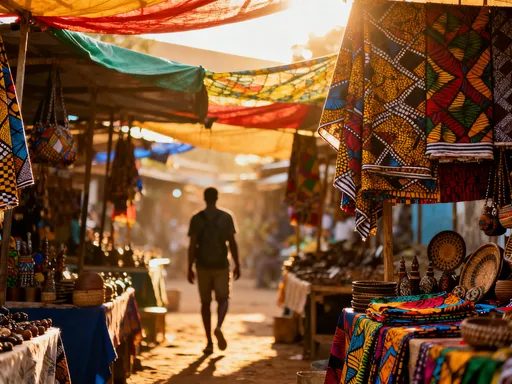
If Brazzaville has a beating heart, it is Marché Total. Located in the central district, this sprawling market is a feast for the senses. As you approach, the noise hits first—the overlapping voices of vendors, the rhythmic beat of Afro-Congolese music from a nearby radio, the sizzle of meat on a charcoal grill. Then comes the color: rows of fabric stalls explode with patterns, from bold Ankara prints to intricate Kuba cloth. The air carries a mix of spices, sweat, and frying oil, a testament to the market’s unfiltered authenticity.
Marché Total is organized into sections, though the boundaries are more felt than formal. One aisle specializes in textiles, where bolts of fabric are unfurled like treasure maps. Another offers household goods—plastic buckets, enamel pots, and brooms made from natural fibers. A third is dedicated to crafts: wooden statues, beaded necklaces, hand-carved walking sticks, and ceremonial masks. These items are not just souvenirs; many have cultural significance, used in rites of passage, festivals, or family rituals.
Authenticity is key when shopping here. To distinguish locally made crafts from imported goods, look for signs of handwork—slight imperfections in carving, natural dyes in fabric, or the weight of solid wood. Genuine Kuba cloth, for example, is made from raffia and features geometric patterns unique to the Democratic Republic of Congo’s Kasai region. It feels stiff to the touch and may have small irregularities—a sign of its handmade origin. Avoid pieces that feel too uniform or lightweight, as they may be factory-made replicas.
Shopping etiquette matters. Vendors appreciate interest, but not aimless browsing without engagement. A simple greeting in Lingala, such as “Mbote” (hello), goes a long way. Haggling is expected, but it should be done with respect, not aggression. Start by asking the price, then offer slightly less—never insultingly low. A smile, patience, and willingness to walk away often lead to the best deals. Most importantly, treat each interaction as a human exchange, not just a transaction. When you buy a mask from an artisan, you’re not just acquiring an object—you’re honoring a tradition.
Off-the-Beaten-Path: Discovering Neighborhood Markets Only Locals Know
Beyond the well-trodden paths of downtown Brazzaville lie quieter, more intimate markets known primarily to residents. These neighborhood hubs—found in areas like Makelekele, Bacongo, and Ouenzé—are where locals buy their daily food, clothing, and household items. They lack the polish of central markets, but they offer something rarer: authenticity and connection. For the walking traveler willing to stray from tourist maps, these spaces provide a genuine glimpse into everyday Congolese life.
These markets are often informal—rows of women sitting on low stools under umbrellas, displaying tomatoes, onions, and dried fish on cloths spread over the ground. Some are little more than clusters of kiosks selling soap, batteries, and school notebooks. Yet within this simplicity lies beauty. A vendor might offer you a taste of fresh sugarcane, or a tailor might invite you to watch him sew a traditional boubou by hand. These moments of hospitality are not performative; they are genuine expressions of community.
Finding these markets requires curiosity and respect. Ask a local guide or hotel staff for directions, or simply follow the flow of foot traffic in residential areas. When you arrive, move slowly. Observe before engaging. A nod, a smile, and a quiet presence are often more welcome than immediate photography or loud inquiries. Remember, you are a guest in a space designed for locals, not a spectacle for visitors.
What you’ll find here may surprise you. In Makelekele, a woman might sell hand-embroidered napkins with floral motifs passed down through generations. In Bacongo, a metalworker might craft spoons and bracelets from recycled aluminum, shaping them with tools that look centuries old. These items are not made for tourists, but for daily use—yet they carry deep cultural value. Purchasing them supports families directly and helps sustain traditional skills that might otherwise fade.
Walking through these neighborhoods also reveals how Brazzaville’s markets are woven into the fabric of life. A schoolgirl buys notebooks before class. A mother selects yams for dinner. A man purchases a new pair of shoes for a wedding. These are not shopping trips—they are rituals of care, preparation, and celebration. To witness them is to understand that commerce here is not separate from life; it is life itself, unfolding in plain sight.
What to Buy: Authentic Souvenirs That Support Local Artisans
Not all souvenirs are created equal. In a city like Brazzaville, where craftsmanship runs deep, the choices you make as a buyer carry weight. Opting for mass-produced imports from China does little to support local economies. But choosing hand-stitched textiles, sustainably sourced wood carvings, or jewelry made from recycled materials helps preserve traditions and empowers families. The key is knowing what to look for—and why it matters.
One of the most meaningful purchases is authentic Congolese fabric. Ankara, though now popular across Africa, is often locally designed and printed with symbols that tell stories. Look for patterns that incorporate traditional motifs—such as the “tree of life” or “leopard’s claw”—which carry cultural significance. Kuba cloth, made by the Kuba people, is another treasure. Each piece is unique, handwoven from raffia and dyed with natural pigments. These textiles can be used as wall hangings, scarves, or even framed art, serving as lasting reminders of your journey.
Wood carvings are another standout. Masks, statues, and stools are often made from sustainably harvested hardwoods like ebony or mahogany. Authentic pieces will have weight, grain variation, and hand-carved details. Avoid items that feel too light or smooth—these may be made from pressed fiber or imported plastics. When possible, buy directly from the artisan. Many carvers work in open-air workshops near markets, allowing you to see the process and ask about the symbolism behind their work.
Recycled-material crafts offer both creativity and environmental consciousness. In neighborhoods like Makélékélé, artists transform discarded metal, glass, and fabric into beautiful objects. You might find earrings made from bottle caps, baskets woven from plastic strips, or sculptures crafted from old bicycle parts. These pieces reflect innovation and resilience, turning scarcity into art. By purchasing them, you support sustainable practices and encourage eco-friendly entrepreneurship.
Ultimately, the most valuable souvenirs are those with a story. A handwoven basket used for carrying market goods. A beaded bracelet made for a daughter’s coming-of-age ceremony. A wooden spoon carved for a wedding gift. These items connect you to people, not just places. They honor the skill, history, and heart behind their creation. And in a world where fast fashion and disposable goods dominate, choosing such souvenirs is a quiet act of resistance—a vote for tradition, dignity, and mindful consumption.
Practical Tips: Staying Safe, Bargaining Right, and Carrying Your Finds
Exploring Brazzaville’s markets on foot is rewarding, but it comes with practical considerations. Safety, respect, and preparation ensure a smooth and positive experience. While the city is generally welcoming, crowded markets can attract opportunistic pickpockets. Keep your belongings secure—use a crossbody bag worn in front, avoid flashing large amounts of cash, and carry only what you need for the day. Men should keep wallets in front pockets; women might consider a money belt under clothing.
Bargaining is a normal and expected part of market culture, but it should be done with courtesy. Begin by asking the price, then offer 20–30% less. Listen to the vendor’s counteroffer and meet somewhere in the middle. Smiling, speaking calmly, and showing genuine interest in the item helps build rapport. Never mock the price or walk away angrily—this can cause offense. Remember, for many vendors, even a small profit makes a difference in their day.
Language can be a bridge. While French is the official language, Lingala is widely spoken in markets. Learning a few basic phrases—“Mbote” (hello), “Nawe?” (how are you?), “Sala” (thank you)—shows respect and often leads to warmer interactions. If you don’t speak the language, a smile and gestures can go far. Many vendors are patient and enjoy teaching visitors a word or two.
Carrying your purchases requires planning. Bring a sturdy, reusable shopping bag—preferably foldable, so it fits in your daypack. Plastic bags are common but fragile; a strong cloth bag protects your items during long walks. For fragile purchases like masks or pottery, wrap them in clothing or ask the vendor for protective packaging. If you buy multiple items, consider hiring a porter for a short distance—many young men near markets offer this service for a small, fair fee.
Hydration and pacing are also important. Brazzaville’s climate is hot and humid, especially in the afternoon. Carry water, wear breathable clothing, and take breaks in shaded areas. Visit markets in the morning when temperatures are cooler and stalls are fully stocked. Avoid walking alone at dusk, and stick to well-populated routes. With these simple habits, you can explore confidently, comfortably, and respectfully.
Why This Journey Matters: Connecting Culture, Commerce, and Conscious Travel
Walking through Brazzaville’s markets is more than a shopping trip—it is an act of connection. Every step you take, every conversation you have, every purchase you make becomes part of a larger exchange. You are not just observing culture; you are participating in it. In a world where tourism often prioritizes speed and convenience, choosing to walk slowly, engage deeply, and buy meaningfully is a radical choice—one that honors the dignity of the people you meet.
These markets are not just places of commerce; they are spaces of resilience. Many vendors are women supporting children, elders, or extended families. A single day’s earnings might cover school fees, medicine, or a meal. When you buy from them, you contribute to a chain of care that extends far beyond the transaction. You help sustain not just a business, but a life.
Conscious travel means recognizing this. It means seeing the person behind the product, understanding the context of their work, and treating each interaction with humility. It means resisting the urge to photograph without permission, to haggle without heart, or to treat people as part of a backdrop. Instead, it calls for presence, gratitude, and reciprocity.
And in return, you receive something priceless: a deeper understanding of what it means to live, to create, to endure. You carry home more than souvenirs—you carry stories. The memory of a woman who taught you how to fold a scarf from her fabric. The laughter shared with a carver who named his mask after you. The taste of grilled plantains eaten on a stool beside a bustling alley.
In the end, walking through Brazzaville’s markets is not just about what you find. It’s about what finds you. It’s about the quiet realization that humanity, in all its beauty and struggle, is alive in the everyday. And sometimes, all it takes is a single step off the main road to discover it.